





















Beyond the Tool: How to Find a Company that Specializes in Industrial Bolting Systems
March 17, 2026
TorqLite Hands-Free Hydraulic Riser Wrench Reduces Offshore Pinch-Point Risks
June 30, 2026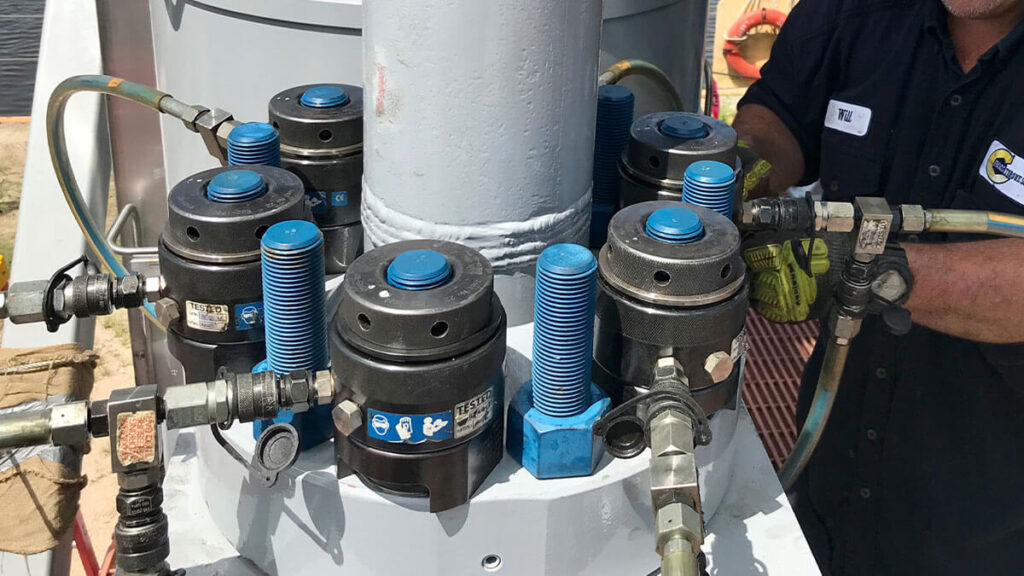
Summary
- Hydraulic bolt tensioners deliver precise, repeatable preload by applying axial force, reducing friction-related inconsistencies.
- Hydraulic tensioners improve safety, efficiency, and load distribution in critical applications across industries such as oil and gas, power, and wind energy.
- TorqLite provides engineered tensioning solutions designed for reliability, performance, and demanding industrial environments.
Table Of Contents
- What are Hydraulic Bolt Tensioners?
- What are The Advantages Of Hydraulic Bolt Tensioners?
- How Do Hydraulic Tensioners Work?
- What are The Different Hydraulic Bolt Tensioner Types?
- Where are Hydraulic Bolt Tensioners Used?
- How Do You Use Hydraulic Bolt Tensioners?
- How Do You Choose The Right Hydraulic Bolt Tensioner?
- Why Choose TorqLite For Hydraulic Bolt Tensioning Solutions?
- Frequently Asked Questions
What are Hydraulic Bolt Tensioners?
Hydraulic tensioners are precision tools designed to apply a direct axial load to a bolt. Instead of relying on rotational force, as traditional torque wrenches do, these tools stretch the bolt with hydraulic pressure before the nut is secured.
This method minimizes friction variables that often affect torque-based tightening. As a result, operators achieve more accurate and repeatable preload, which is essential in critical applications where even slight inconsistencies can lead to failure.
Compared to conventional methods, hydraulic tensioners offer better control, improved safety, and more uniform load distribution across multiple fasteners.
What are The Advantages Of Hydraulic Bolt Tensioners?
Hydraulic tensioners have several advantages over traditional tightening methods, making them the preferred choice for industries that prioritize reliability and performance. These include:
- High accuracy and repeatability for critical applications
- Even load distribution across multiple fasteners
- Reduced risk of thread damage and galling
- Improved operator safety with controlled force application
- Faster and more efficient bolting processes
How Do Hydraulic Tensioners Work?
Hydraulic bolt tensioners work by applying pressure to stretch the bolt along its axis. First, operators mount the tool onto the bolt and apply hydraulic pressure through a pump system.
As pressure increases, the bolt is stretched along its axis, creating tension without rotating the fastener. While the bolt remains stretched, operators turn the nut by hand or with minimal force.
Once the hydraulic pressure is released, the bolt attempts to return to its original length, evenly distributing the load across the joint.
This process ensures a consistent, precise preload, significantly reducing the risks of uneven tightening or over-torquing.
What are The Different Hydraulic Bolt Tensioner Types?
Different bolting environments require specialized tools. That’s why TorqLite offers a variety of hydraulic tensioners to suit any job or industry.
Below are the different types of hydraulic bolt tensioners:
TSR+ Tensioners
TSR+ tensioners are for applications that require consistent performance and reduced downtime. These tools feature an auto-return function that streamlines the tensioning process during repetitive operations.
The TSR+ Tensioners can maintain performance over time, with safety features such as relief valves and durable surface treatments that support use in demanding environments.
Typhoon+ Tensioners
Typhoon+ tensioners are commonly used in the wind energy sector, particularly in turbine installation and maintenance, where applications often involve high bolt loads and limited access. Their design supports use in both onshore and offshore environments.
Subsea Tensioners
Subsea tensioners are for underwater environments, where corrosion resistance and reliability are critical. Their nickel-plated exterior protects against harsh conditions, while high-pressure composite seals ensure consistent performance.
Foundation Tensioners
Foundation tensioners are for wind turbine bases and foundation bolts. They meet the strict demands of the wind industry while remaining easy to use and dependable.
Hydraulic Nuts
Hydraulic nuts simplify the tensioning of large-diameter bolts by eliminating the need to rotate the nut. It reduces torsional stress on threads and minimizes space requirements in confined areas.
Standard Hydraulic Tensioners
Standard hydraulic tensioners are versatile tools designed for topside applications. They combine hydraulic power with interchangeable adaptor kits, allowing a single system to accommodate various bolt sizes.
Engineered to fit industry standards such as ANSI, MSS, and API flanges, these tensioners provide flexibility and efficiency across a wide range of applications.
Xtra Range Tensioners
The Xtra range tensioners are designed to provide enhanced performance with increased load capacity and an extended piston stroke. The base models feature a standard 15 mm stroke, allowing for efficient operation across a wide range of applications.
These compact tools deliver greater load capacity while maintaining operational efficiency, making them suitable for applications requiring both precision and consistent performance.
Multi-Stud Tensioners
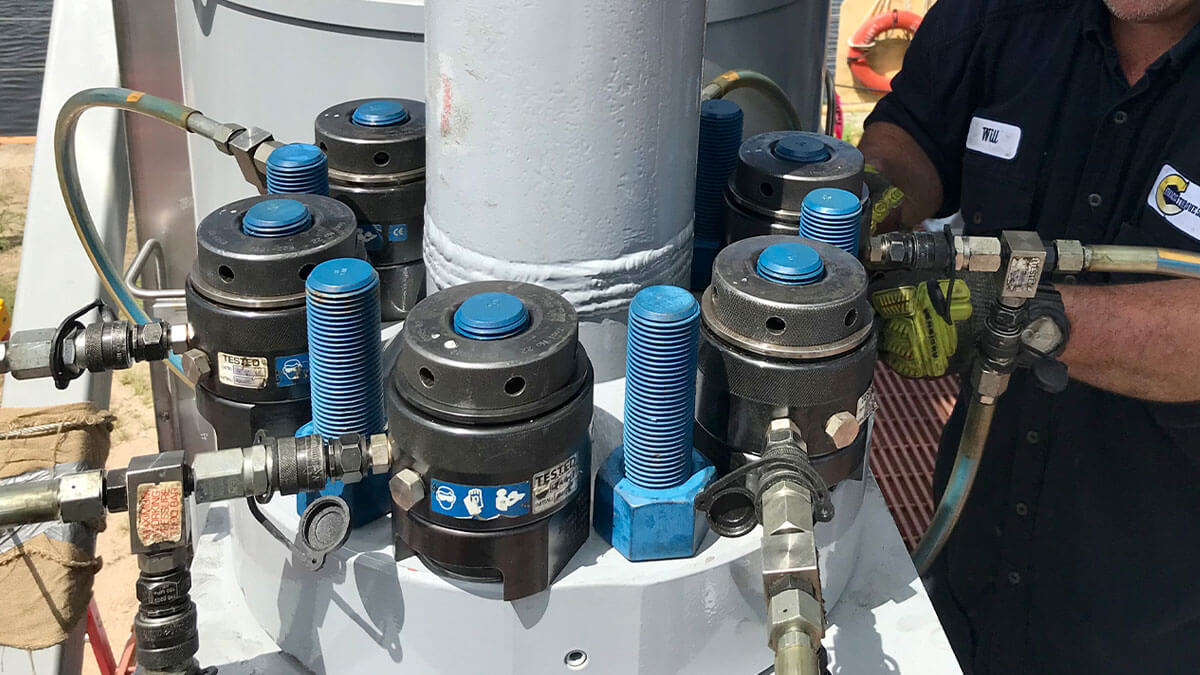
Multi-stud tensioners provide efficiency by allowing simultaneous tensioning of multiple studs. These tools are often custom-designed to meet specific requirements, accommodating a range of bolt sizes, load conditions, and environmental factors.
Pumps And Accessories
Hydraulic pumps and accessories provide the power required for bolt tensioning operations. Available in electric, hand, air, and stainless steel configurations, these systems deliver reliable performance across a range of bolting applications, with pressure outputs up to 2500 Bar.
Echometer Range
The Echometer range uses ultrasonic technology to measure bolt elongation, stress, and load. They help ensure correct initial loading and allow operators to verify retained load at any time, improving overall bolting accuracy.
Engine Tool Sets
Engine tool sets are complete kits for installing and maintaining gas and diesel engines. Each set includes essential components such as pumps, hoses, and operating manuals.
These ready-to-use solutions are tailored for specific OEM engines or can be customized to meet unique requirements.
Closure Systems, Rotor Tools, And Casing Tools
Hydraulic closure systems provide a safe and efficient method for holding joints and checking turbine clearances in power generation and oil and gas applications. They attach to existing infrastructure without requiring modifications, offering a quick and uniform approach.
Where are Hydraulic Bolt Tensioners Used?
Hydraulic tensioners play a vital role across multiple industries where precise bolt loading is critical. Some of the industries that benefit from hydraulic tensioners include:
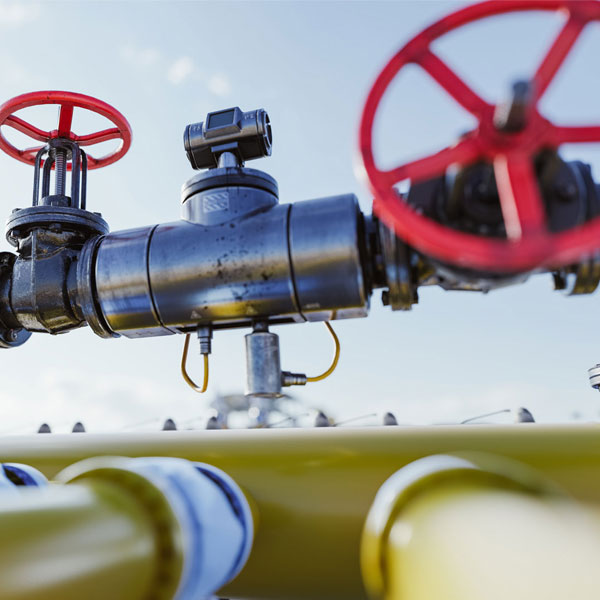
- Oil And Gas Operations: Used in pipelines, drilling equipment, and offshore rigs where high-pressure connections demand consistent preload.
- Power Generation Facilities: Essential for turbines, boilers, and other critical systems that require reliable bolting under extreme conditions.
- Wind Energy Installations: Applied in turbine assembly and maintenance to ensure structural integrity and long-term performance.
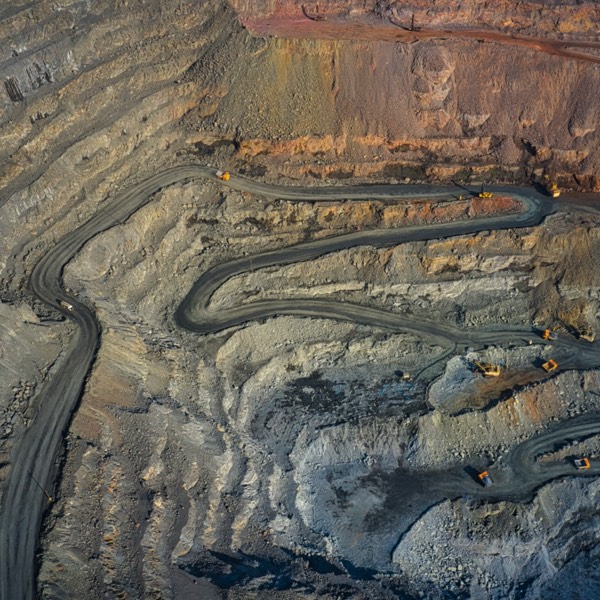
- Heavy Equipment and Mining: Operators use them in large machinery where bolts are subjected to heavy loads and vibration.
- Petrochemical and Industrial Plants: Ideal for applications requiring precision and safety in high-temperature and high-pressure environments.
How Do You Use Hydraulic Bolt Tensioners?
Using hydraulic tensioners involves a systematic process to ensure safety and accuracy. First, the tool is properly mounted onto the bolt, ensuring correct alignment and engagement.
Next, hydraulic pressure from a pump is applied to stretch the bolt. Once the system reaches the desired load, operators turn the nut down to secure the joint. Finally, the pressure is released, allowing the load to transfer evenly across the fastener.
Operators should always follow manufacturer guidelines, use calibrated equipment, and observe safety protocols to achieve optimal results.
How Do You Choose The Right Hydraulic Bolt Tensioner?
Selecting the right tool depends on several factors. Bolt size, required load, and accessibility all play a significant role in determining the appropriate tensioner.
Environmental conditions should also be considered, especially in offshore, high-temperature, or corrosive environments. Choosing high-quality equipment ensures durability, consistent performance, and long-term reliability.
Working with a trusted provider like TorqLite helps ensure you get the right solution tailored to your specific application.
Why Choose TorqLite For Hydraulic Bolt Tensioning Solutions?
Choosing the right bolting solutions provider directly impacts safety, reliability, and overall operational performance. It’s not just about having the right tools—it’s about working with a partner that delivers precision-engineered solutions, consistent results, and long-term support.
TorqLite has established itself as a trusted name in industrial bolting by focusing on quality, accuracy, and durability.
With over 40 years of experience and a strong commitment to engineering excellence, they build hydraulic bolting tools to perform in demanding environments where precision is critical.
Their solutions help operators achieve consistent preload, reduce the risks associated with improper tightening, and improve efficiency across applications. This level of reliability is essential for industries where even minor inconsistencies can lead to costly downtime or safety issues.
Let us discuss your requirements and find the right fit for your application. Connect with a TorqLite specialist today.
FAQs
A hydraulic tensioner is a tool that applies axial force to stretch a bolt using hydraulic pressure. It allows the nut to be tightened without friction interference, resulting in accurate and uniform preload.
There are several types of hydraulic tensioners designed for specific applications, including TSR+ tensioners, Typhoon+ tensioners for wind energy applications, subsea tensioners, foundation tensioners, standard bolt tensioners, Xtra range tensioners, and multi-stud tensioners.
Hydraulic tensioners work by applying pressure to stretch the bolt along its axis. Once stretched, the nut is secured, and the pressure is released, evenly distributing the load across the joint.
Industries such as oil and gas, power generation, wind energy, and heavy equipment primarily use hydraulic tensioning tools.
In heavy machinery, hydraulic tensioners ensure that large bolts are evenly loaded, reducing the risk of loosening or failure under vibration and heavy loads.
To use a hydraulic bolt tensioner, mount the tool onto the bolt, apply hydraulic pressure to stretch the bolt, tighten the nut, then release the pressure.