
























This Women’s History Month, a Woman-Led Manufacturer Is Redefining Precision in Hydraulic Bolting
June 30, 2026
The Complete Guide to Torque Multipliers: How They Work and How to Use Them Safely
July 9, 2026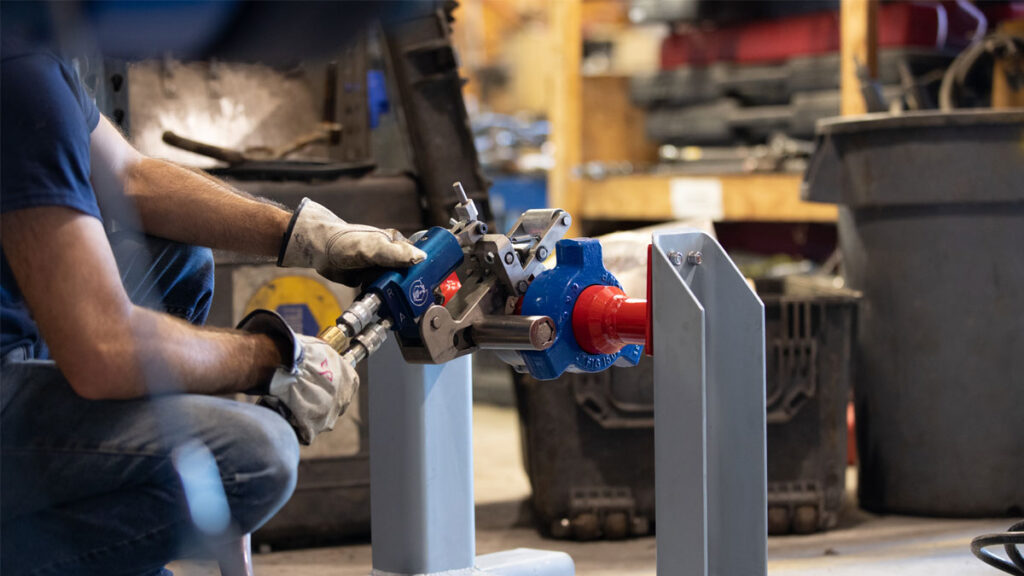
Summary
In confined industrial environments, standard tools often fail due to limited clearance and reaction constraints. Selecting the right low-clearance hydraulic torque wrench ensures precise, repeatable bolt tension, improved safety, and reliable performance. Proper engineering, compact design, and accurate fit are critical when working in restricted-access applications.
Table of Contents
- Why Does Tight-Space Bolting Require a Different Approach?
- What Challenges Do Tight Space Bolting Applications Present?
- What Criteria Should You Use When Choosing a Low Clearance Hydraulic Torque Wrench?
- How Do You Ensure Proper Fit Before You Buy?
- How Do Different Tool Types Compare in Tight Spaces?
- Why Is the IU-XL Series Designed for Limited Access Applications?
- Frequently Asked Questions
Why Does Tight-Space Bolting Require a Different Approach?
Professionals in demanding industries like subsea oil and gas, wind energy, refineries, and heavy manufacturing know that space is often limited, making standard wrenches impractical.
In these environments, tightly spaced flanges, surrounding structural steel, and adjacent bolts restrict tool access and movement. This is why tight-space bolting requires specialized engineering rather than modified general-purpose tools.
Selecting the right low-clearance hydraulic torque wrench is not a one-size-fits-all solution. Different industries and applications have different requirements, and choosing the right tool for the job is crucial to ensure safety, efficiency, and accuracy.
What Challenges Do Tight Space Bolting Applications Present?
Tight-space bolting applications create several challenges that teams must address to complete the job successfully. Some of these challenges include:
- Limited Access: Tight spaces can restrict access to bolts and nuts, making it difficult for traditional tools to reach and apply torque.
- Restricted Movement: In some cases, there may not be enough room for a worker to maneuver their body or tools freely, requiring specialized equipment that can fit into small spaces.
- High Torque Requirements: Tight-space bolting often requires large bolts or high-strength materials, which require high torque. It requires powerful, compact tools that can deliver the necessary force without compromising accuracy.
- Safety Concerns: The confined space and high torque requirements pose safety risks, making it crucial for workers to use tools specifically designed for these tasks.
What Criteria Should You Use When Choosing a Low Clearance Hydraulic Torque Wrench?
To select the most suitable industrial hydraulic torque wrenches for your specific application, consider a few key criteria.
Why is Slim Profile and Head Design Important?
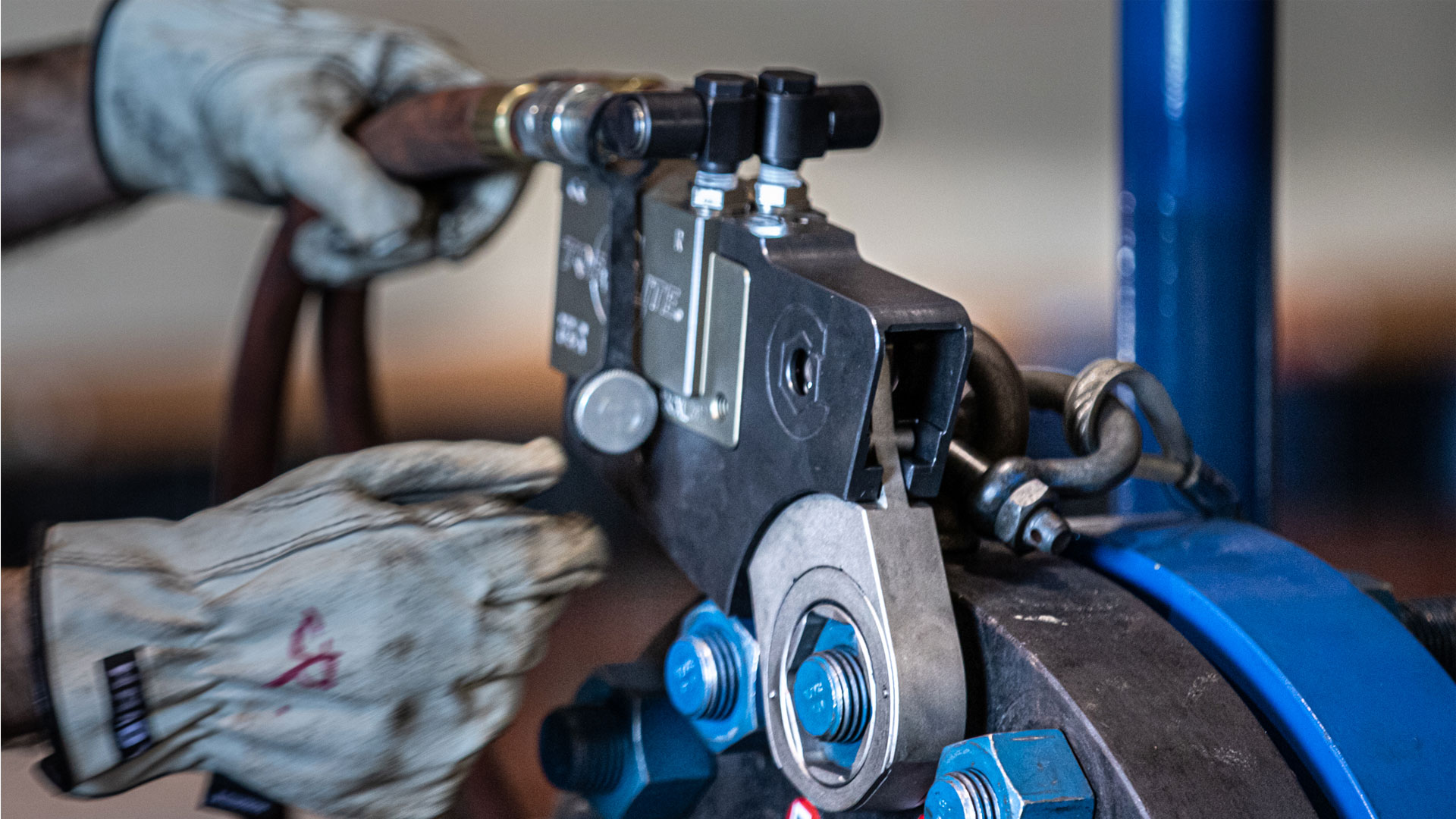
A true low-clearance hydraulic torque wrench uses a head-style design instead of a bulky square drive. Interchangeable heads allow operators to match socket size without increasing tool width.
For applications involving jam nuts or stacked fasteners, a jam-nut hydraulic wrench configuration may be necessary to ensure proper engagement without increasing the overall footprint.
How Does Torque Output and Power-to-Size Ratio Matter?
Tight spaces do not reduce torque requirements. In many cases, critical flanges require high torque values while providing minimal access.
An effective low-profile tool delivers high torque within a compact frame. The IU-XL series maintains a strong power-to-size ratio while providing the necessary clearance.
Why is Durability Critical in Harsh Environments?
Restricted-access applications often occur in challenging environments—offshore rigs, subsea platforms, wind towers, and petrochemical plants. Reliability under pressure is essential.
Durable components, controlled hydraulic systems, and proven structural integrity distinguish professional-grade equipment from lower-tier alternatives.
Why Do Engineering and Certification Standards Matter?
ISO 9001-certified engineering bolting solutions ensure high-quality, traceable fasteners and tensioning tools for critical industries. This certification confirms that the equipment passed rigorous testing and meets international quality management standards.
For instance, as an ISO 9001-certified company, TorqLite designs and manufactures its own wrenches, maintaining full control over assembly, testing, calibration, and quality assurance.
How Do You Ensure Proper Fit Before You Buy?
You must verify clearance dimensions before selecting a tool. Even the most advanced wrench cannot perform if it does not fit properly.
Before purchasing, professionals should gather:
- Bolt size and nut dimensions
- Radial clearance between fasteners
- Axial clearance above the nut
- Flange thickness and obstruction details
How Do Different Tool Types Compare in Tight Spaces?
Different tool designs perform differently in confined environments.
Are Standard Square Drive Wrenches Suitable?
Square-drive hydraulic wrenches work effectively in open environments with sufficient bracing surfaces for the reaction arms. However, their size and reaction arm design often cause interference in tight flange assemblies, making them less suitable for restricted-access applications.
What Makes Low Clearance Hydraulic Torque Wrenches Different?
Engineers design low-profile head systems for tight spaces. Their slimmer head design allows operators to use them where square drive tools cannot fit.
A good low-clearance hydraulic torque wrench can improve access, reduce setup time, and increase efficiency in confined areas.
When is a Jam Nut Hydraulic Wrench Required?
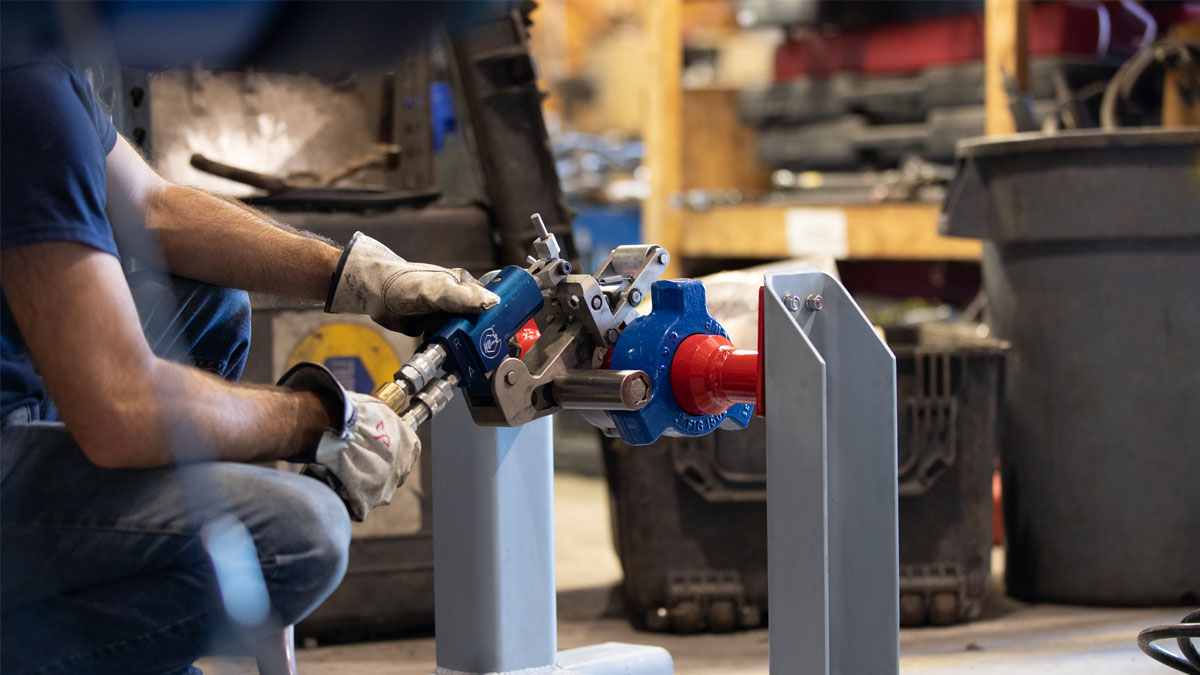
Technicians often use jam nut hydraulic wrenches in applications where standard torque wrenches cannot operate due to size constraints. They rely on these tools in tight spaces, such as between pipes or in areas with restricted access.
They are also commonly used to tighten or loosen jam nuts, which is why they are called “jam nut hydraulic wrench.” This tool fits onto the smaller inner nut of a two-nut assembly and provides accurate torque even in tight spaces.
A key feature to look for in a jam nut hydraulic wrench is an open-gate design, which allows the tool head to latch around the nut even when obstructions are present. TorqLite pioneered this technology, establishing the world’s first patented open-gate hydraulic torque wrench with their JN Series, delivering creative and safe solutions for even the most difficult bolting situations.
Why is the IU-XL Series Designed for Limited Access Applications?
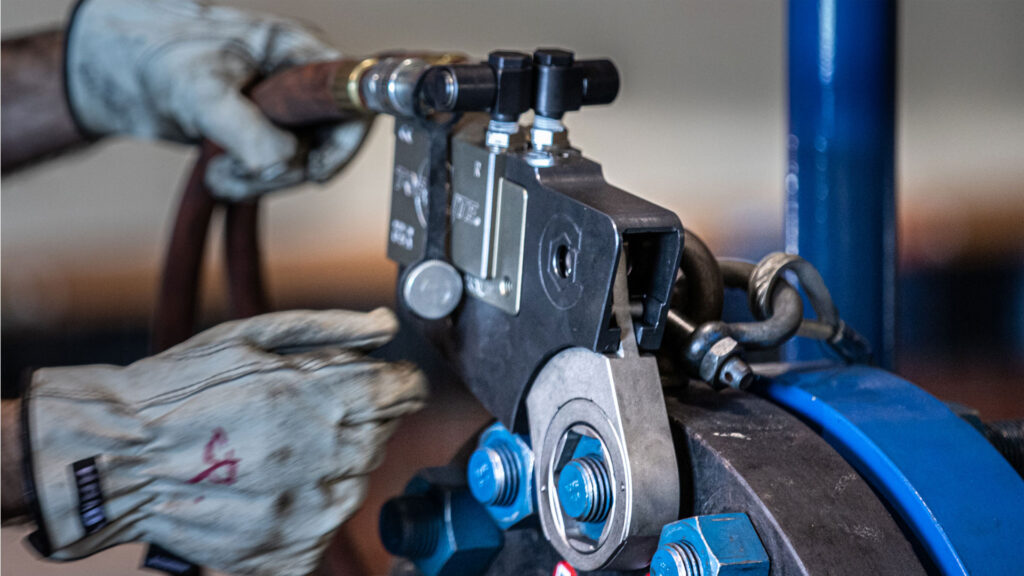
The IU-XL series delivers reliable performance in confined bolting environments. As part of the IU-XL Series limited access tools, this line delivers high torque output in an ultra-compact profile.
Designed for flange work, subsea risers, and structural assemblies, the IU-XL maintains precise engagement even in extremely tight radial clearances. Its head-based system minimizes overall tool height while maximizing usability in constrained spaces.
This balance of compact size and high performance makes the IU-XL series a trusted choice for tight space bolting solutions.
Precision Starts with the Right Choice
When working in confined environments, tool selection cannot be left to guesswork. Selecting the correct equipment reduces installation time, prevents fastener damage, and improves long-term joint integrity.
Moreover, choosing the right partner matters as much as choosing the right product. With decades of innovation, patented designs, and ISO 9001 registered manufacturing processes, TorqLite delivers reliable, tight-space bolting solutions for demanding industrial environments.
If your next project involves limited clearance challenges, contact a TorqLite specialist to request a clearance compatibility check and ensure the right fit for your application.
FAQs
The best hydraulic torque wrench for tight spaces features a slim, head-style profile, interchangeable heads ,high torque output in a compact frame, and engineering specifically designed for restricted access rather than general-purpose use.
Low-profile hydraulic torque tools offer reduced head thickness, improved access in limited radial and axial clearances, minimized reaction-arm interference, and increased efficiency in confined flange assemblies.
You should measure bolt size, nut dimensions, radial clearance between fasteners, axial clearance above the nut, and flange thickness. Providing accurate measurements helps confirm proper fit and prevents costly downtime.
Yes. Tight spaces do not reduce torque requirements. For example, the IU-XL series torque wrenches deliver high torque in a compact design that performs reliably in limited-access conditions.
TorqLite has decades of engineering experience, ISO-certified processes, and proven performance in subsea and industrial applications, and can provide specialized support. You can also request a clearance compatibility check with us to confirm the correct tool configuration for your specific application.